Carlisle, Cumbria
Chimney Repairs in Carlisle
Chimney stack repairs, repointing, lead flashing and damaged masonry put right, with partial or full rebuilds where the condition of the stack calls for it. Work is arranged for houses across Carlisle and the nearby villages.
Not sure what the problem is? Tell us what you've noticed.
See what to check before agreeing to chimney work.Not sure what needs repairing? Start here before comparing quotes.
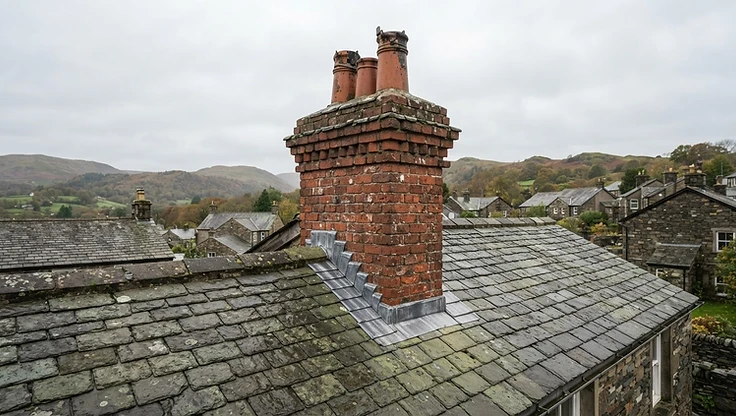
Victorian red brick
Common through the older terraced streets close to the city centre.
Local sandstone
Seen in detailing, copings and older buildings around Carlisle.
Cumbrian slate
Roof coverings that need care when working around a stack.
Lime and cement mortars
Older stacks were often built with softer, more breathable mixes.
Common chimney problems in Carlisle homes
Chimney stacks take more weather than any other part of a house. They stand clear of the roof, they get wind driven rain from every side, and around Carlisle they go through repeated wetting, drying and freezing through the winter. Water sitting in a mortar joint expands when it freezes, opens the joint slightly, and the next spell of rain gets in a little further. Over the years that cycle is what quietly takes a stack apart.
Most people notice one of a fairly small set of symptoms. The tricky part is that the same symptom can have more than one cause, and the visible damage is not always where the water is entering.
Loose or missing mortar
Joints that have weathered back, or mortar you can rub out with a finger. Often worst on the exposed side of the stack.
Cracked or spalling bricks
Faces flaking away after repeated frost. Once a brick has broken up, pointing over it rarely lasts.
A stack that looks out of line
Leaning, bulging or a stack that no longer sits square on the roof. Worth having looked at rather than left.
Staining on the chimney breast
Damp patches or tide marks inside, sometimes only appearing after driving rain from one direction.
Leaks around the chimney
Water showing in the loft or on ceilings near the stack. The cause is not always the brickwork.
Damaged lead flashing
Lead that has lifted, split or pulled out of the mortar joint where it is tucked into the masonry.
Loose chimney pots
Pots that rock, or cracked flaunching around the base of the pot at the top of the stack.
Debris in the garden or gutter
Bits of mortar or brick collecting at the base of the roof or in the hopper below.
A damp patch on a chimney breast, for example, might be failed leadwork, open mortar joints, a porous or cracked brick, a slipped slate a course or two below the stack, or a redundant flue with no ventilation. Fixing the wrong one costs money and leaves the problem where it was. That is why it is worth establishing the cause before agreeing a scope of work. Our page on leaking chimneys works through the possibilities in more detail.
Our chimney repair services
Each page explains what the work involves, what tends to cause the problem and what to ask before agreeing to it.
Chimney Repointing
Raking out and renewing failed mortar joints in a chimney stack, using a mix suited to the existing masonry.
Chimney Stack Repairs
Replacing damaged bricks, rebedding loose masonry, renewing flaunching and dealing with unstable sections.
Lead Flashing Repairs
Repairing or renewing the leadwork where the stack meets the roof covering, a common source of leaks.
Chimney Rebuilds
Partial or full rebuilding where deterioration or movement has gone beyond what repointing can address.
Leaking Chimneys
Working out where water is actually getting in before deciding what work the property needs.
Chimney Pots & Cowls
Rebedding or replacing loose and damaged pots, and fitting cowls or caps where suitable.
Chimney Removal & Reduction
Taking down or reducing an unused stack, with the roof made good afterwards.
Older Carlisle homes and traditional materials
A good part of Carlisle's housing stock is Victorian or early twentieth century. Streets around Denton Holme, Currock and Caldewgate are largely red brick terraces with slate roofs and tall shared stacks, while sandstone appears in copings, sills and older buildings nearer the centre. Out towards Stanwix, Morton and the newer suburban estates the construction changes again, and so does the way a stack tends to fail.
That matters because repairs should follow how the chimney was actually built. Older masonry was often bedded in softer lime based mortar, which allowed the brickwork to move slightly and let moisture escape. Repointing that same stack in a hard, dense cement mix can trap water in the brick and push the damage into the brick faces instead of the joints. It looks tidy for a while, then the bricks start to break up.
The same thinking applies to bricks and pots. Where a handful of bricks have spalled, replacing them with reclaimed or closely matched units usually sits better than patching with whatever is to hand. Slate roofs need care too, since walking a roof carelessly around a stack can create a second leak that has nothing to do with the chimney.
None of this means an older stack needs specialist treatment for the sake of it. It means someone should look at the construction, the exposure and the condition of the mortar before deciding what to do. Before you decide is worth a read if you are weighing up quotes.

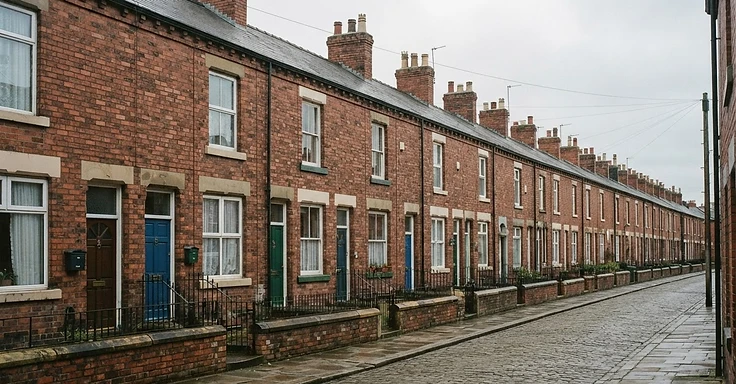
Repair or rebuild?
A failing mortar joint doesn't automatically mean the whole stack needs rebuilding. Plenty of chimneys in Carlisle need nothing more than the joints raking out and repointing properly, a few bricks swapped and the leadwork sorted. Rebuilding becomes the more sensible option when the fabric itself has gone, not simply because the stack looks tired from the ground.
Depth of mortar loss
Joints weathered back a few millimetres are a different job to joints raked out to the middle of the brick.
Condition of the bricks
Sound bricks can be repointed. Bricks that have blown or crumbled need cutting out and replacing.
Signs of movement
Leaning, stepped cracking or a stack twisting above the roofline points towards rebuilding at least part of it.
Water getting in
Long term saturation can soften the core of a stack even where the outer face still looks reasonable.
Flashing condition
Sometimes the masonry is fine and the leadwork is the real problem.
Height and exposure
Tall stacks on exposed gables take more weather and wear unevenly, usually worst on the prevailing side.
Previous patch repairs
Layers of old cement patching often hide what is going on underneath and can shorten the life of the repair.
If you are trying to work out which side of that line your chimney sits on, the pages on chimney repointing, stack repairs and rebuilds set out what each one usually involves.
Before you decide
Chimney work is one of those jobs where two contractors can look at the same stack and describe two very different scopes. Understanding the likely cause first can help avoid paying for more work than the property needs, and it makes it easier to compare what you are being quoted.
These are the questions worth having answers to before you agree to anything.
Read Before You Decide- 01Is the leak definitely coming from the chimney?
- 02Does the stack need repointing, or rebuilding?
- 03Is damaged flashing causing the problem?
- 04Will scaffolding be required?
- 05Are the bricks themselves damaged?
- 06Is the chimney shared with the property next door?
- 07Is the home listed or within a conservation area?
What affects the cost of chimney repairs?
We don't publish fixed prices, because a chimney repair priced from a list is usually either padded or missing something. Two stacks on the same street can differ in cost simply because one is reachable from a flat rear roof and the other needs a scaffold across a garden.
- Height of the stack and how far above the ridge it sits
- How the roof is reached, and whether scaffolding or a tower is needed
- How much of the stack is affected rather than just the worst face
- Number of bricks that need cutting out and replacing
- Area of repointing once the joints are raked back
- Condition of the lead flashing and whether it can be reused
- Chimney pots, cappings and the flaunching around them
- Extent of any rebuilding, including how far down the stack it goes
- Access at the rear of terraces, gardens, narrow lanes and neighbouring property
Clear photographs taken from ground level, or from an upstairs window in a neighbouring property, often give enough to talk sensibly about likely options. Some things, particularly suspected movement or a leak with more than one possible source, need looking at properly before anyone can price the work honestly. Please don't go up on a roof or ladder to get a photograph.

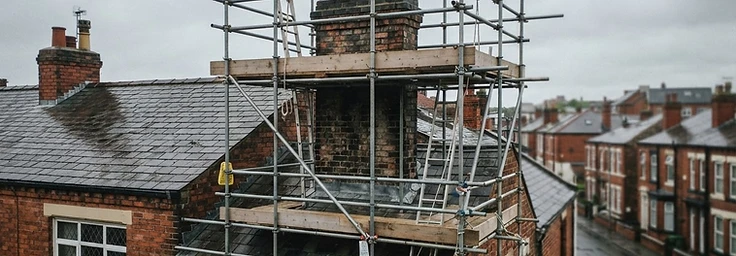
Carlisle service area
Work is arranged across Carlisle and the surrounding area, including the villages within a reasonable distance of the city. There is no branch office in each district, just chimney and masonry work carried out locally.
- Carlisle city centre
- Denton Holme
- Stanwix
- Botcherby
- Harraby
- Currock
- Morton
- Belle Vue
- Raffles
- Caldewgate
- Etterby
- Brampton
If your property sits a little outside these areas, it is still worth asking.
Something not looking right with your chimney?
Tell us what you've noticed and where the property is. We can help you take the next step.